Designing trust for high-consideration purchases.
When the sale is slow and the stakes are high, credibility is the conversion engine. What to prioritise.
Some purchases are easy: low cost, low risk, quick to reverse. Others are not, a big investment, a long commitment, a decision the buyer will have to defend to colleagues. For those high-consideration purchases, the conversion engine is not persuasion. It is trust.
When the stakes are high and the sale is slow, credibility does the heavy lifting. Design it deliberately, or watch qualified buyers quietly leave.
Trust is built in specifics
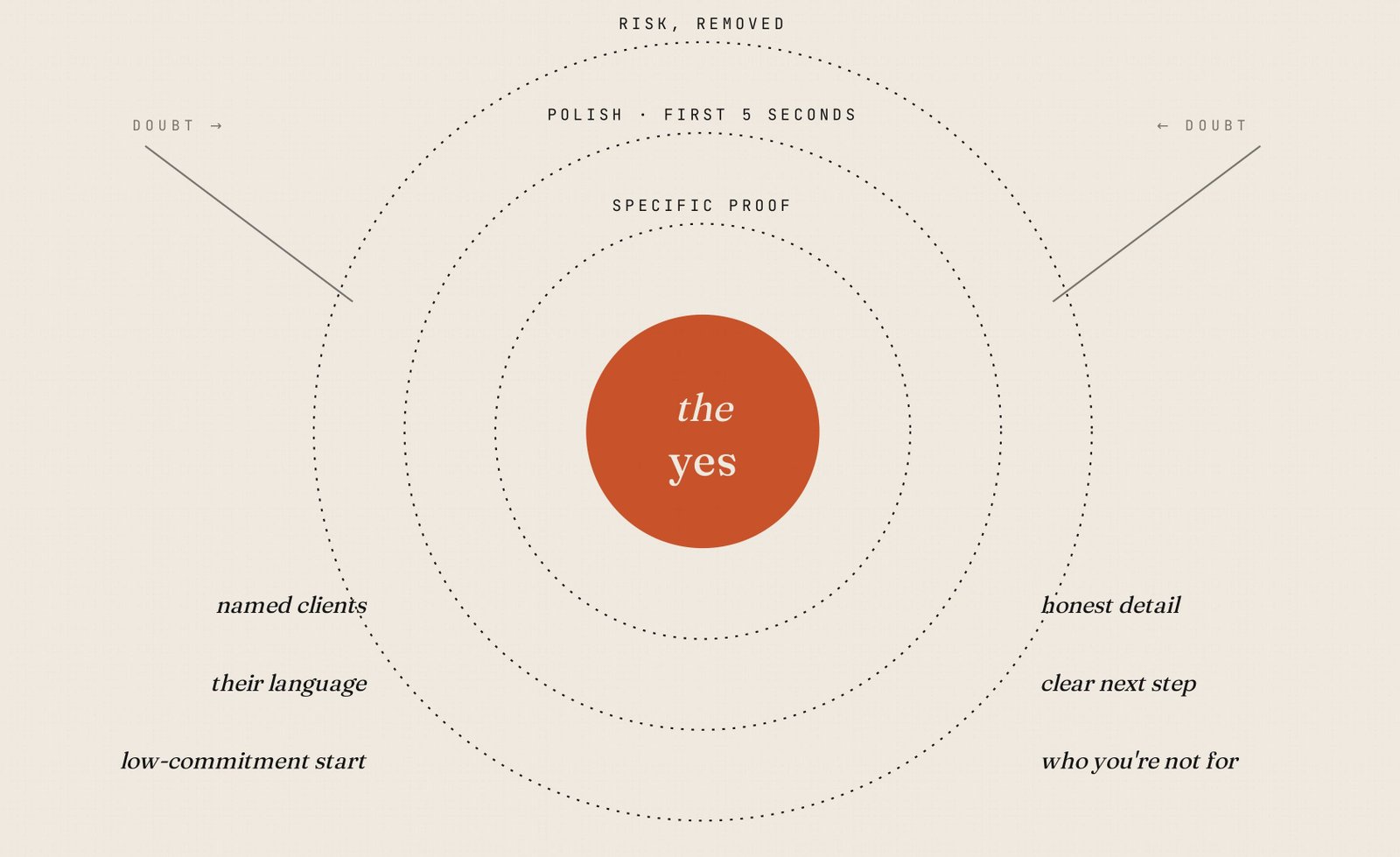
Vague reassurance reads as noise. Buyers weighing a serious decision look for concrete signals that you have done this before, understood their situation, and will still be around afterwards.
- Real proof, named clients, specific outcomes, honest detail, not stock badges.
- Evidence you understand their exact problem, in their language.
- Transparency about how you work, what it costs, and what happens next.
Credibility in the first five seconds
A high-consideration buyer forms a fast, mostly unconscious judgement about whether you are serious. Clumsy design, dated visuals or careless copy quietly disqualify you before a word is read. Polish here is not vanity, it is a signal that you sweat the details, which is exactly what a nervous buyer is checking for.
When the decision is hard, people do not buy the best option. They buy the one they trust enough to choose.
Reduce the perceived risk
Every high-stakes purchase carries a private fear: what if this goes wrong? The most persuasive thing you can do is answer it head-on, clear guarantees, a low-commitment first step, straight talk about who you are not a fit for. Removing risk converts far better than adding pressure.
Map the moments where doubt creeps in, and design trust into each one. For considered purchases, that is the whole game.
Written by Corpex Global
Founder, growth partner