The vanity-metric trap and how to escape it.
Impressions feel like progress. Here is how to re-anchor your dashboards to the metrics your CFO actually cares about.
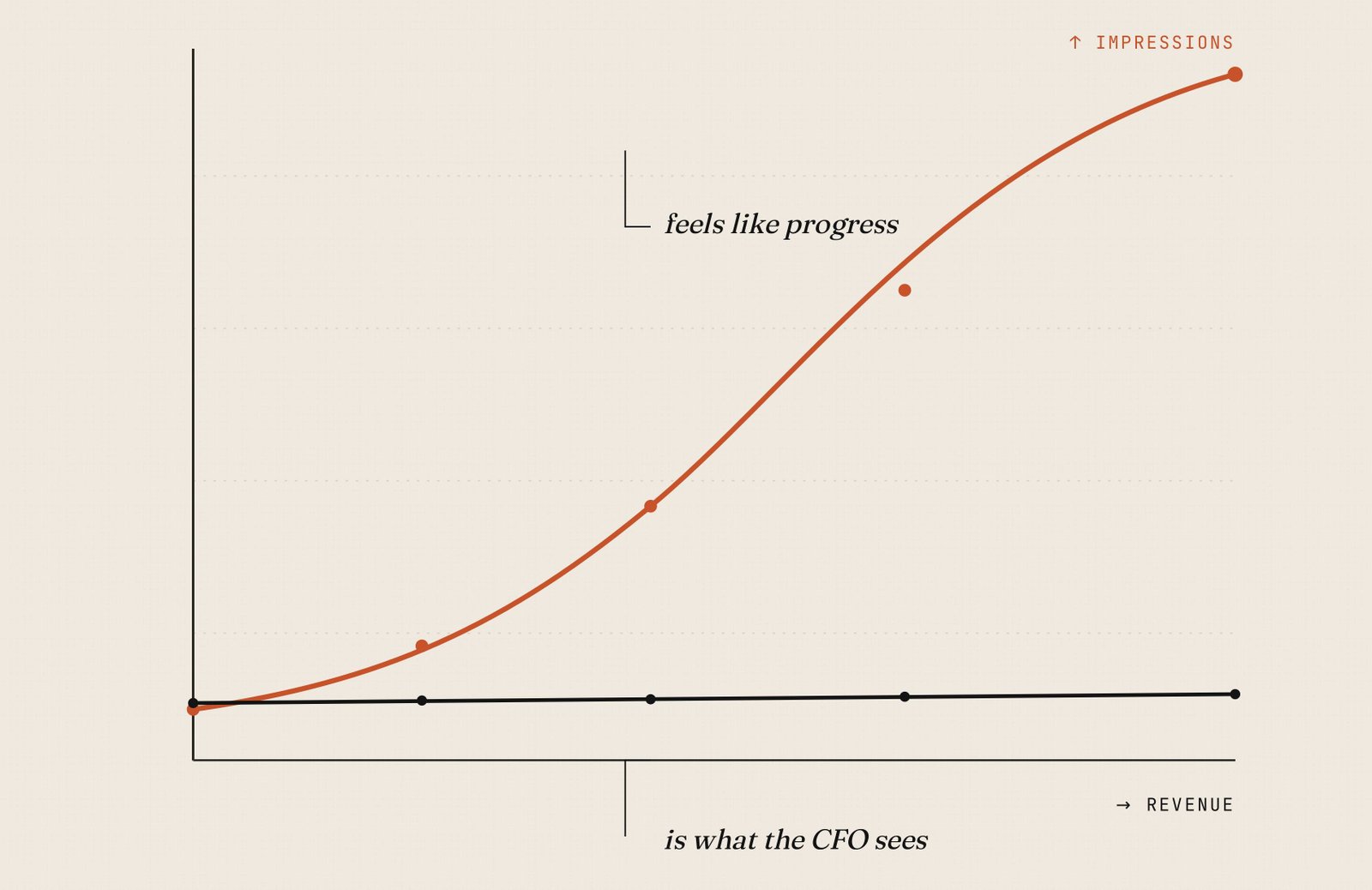
Most growth dashboards are quietly lying to you. Not on purpose, and not with wrong numbers, but by pointing at the wrong ones. Impressions, likes, click-through rates and follower counts all move in ways that feel like momentum, while the number that pays the bills sits somewhere off-screen.
The fix is not more data. It is fewer, better-chosen metrics that connect a marketing action to a commercial result you would actually report to a board.
Why vanity metrics are so seductive
They go up. They are easy to measure, they respond quickly to activity, and they make a status update feel productive. The problem is that they are inputs dressed up as outcomes. A campaign can triple its impressions and lose money on every sale.
- They reward activity, not results.
- They rarely tie back to revenue or cost.
- They are easy to inflate and hard to argue with.
The metrics to anchor on instead
Replace the feel-good numbers with a short list of metrics that survive a conversation with your finance team. The exact set depends on your model, but they usually cluster around three questions: what did it cost to win a customer, what is that customer worth, and how fast is the pipeline moving.
- Cost to acquire a customer, tracked against a target.
- Qualified pipeline, measured on quality and velocity.
- Return on the spend that produced it.
Making the switch stick
Agree the metrics up front, put them at the top of every report, and let the vanity numbers live in an appendix if they must live at all. When the whole team is looking at the same scoreboard, decisions get faster and a lot more honest.
If you cannot connect a metric to revenue, retention or cost, it is a distraction, not a measure of success.
Written by Corpex Global
Founder, growth partner